I have tried all sorts of diets. I'm softer in the midsection than I want to be and I like thinking about how I fuel my body. I've tried Paleo, Whole 30, carb cycling, low-carb with cheats, etc. Recently I learned about counting macros, sometimes known as If It Fits Your Macros (IIFYM). I'm sure people have thoughts that are all over the place about things like counting calories. I know that most of the diets I mentioned do not count calories and instead restrict some sort of food group, type of food(s) or macronutrient. I believe that people lose weight on those diets because they eat fewer calories. It's thermodynamics. I have found that this method works better for me because I have more data to work with.
(If you want a primer on counting macronutrients, check out this blog post)
Today I want to talk about what I think is the most important component of losing weight when you count your macros: EATING FOR VOLUME. What that means is that you try to consume foods that have a high volume or bulk but lower calories in comparison to other foods. A classic example of eating for volume is the base of a salad. Generally lettuce and other greens are very low in calories but take a lot of eating to consume all of it. High volume, low calories.
Eating for volume also has two other distinct advantages. First, vegetables top everyone's list for high volume foods and they are loaded with micronutrients (vitamins and minerals). I think if you locked all the experts and authorities on nutrition into a room, demanding that they came out with some consensus, you'd likely hear "Eat more vegetables" when they emerged (though I guess you could get micronutrients from organ meats if you're into that).
Secondly, when you are trying to lose weight by eating fewer calories, you will be hungry. There isn't a way to avoid it. You're body is accustomed to certain number of calories and won't like you trying to eat fewer. It's evolution in action. You can, however, mitigate some of that hunger by getting bulky foods into your gut. Your stomach will be more satiated without trying to fill up your fat tissue from the extra energy.
Some ideas I incorporate into my diet when I'm trying to eat for volume:
1. Eat salads and vegetables. Easy choice here. Vegetables are disgusting to me but I can focus for 5-10 minutes with a plate of broccoli, cauliflower, spinach and kale in front of me and power through it. I actually cook 4 or 5 12-oz. bags of frozen vegetables in a pot on the stove and eat them over two days for a total of 160-432 calories (the higher end generally have carrots and beans in them) with a ton of volume.
2. Add vegetables to your carbohydrate staples. I shred up zucchini into my oatmeal and boil cauliflower into my potatoes and rice doubling their size. Others use spaghetti squash and "zoodles" (zucchini noodles) to beef up their pasta.
3. Get your protein from food. I tend to shy away from protein drinks and protein bars when trying to lose weight. They taste good but don't leave me feeling full. Lean pountry, pork and beef, however, tend to fill me up a bit more.
4. Eating less sweet fruit. I love a good banana but 100 grams worth is about 90 calories whereas 100g of cantaloupe is only about 35 calories. That means more food in your stomach if you eat the same number of cantaloupe calories. And cantaloupe is good.
I hope this can helps with all your fat loss goals. You absolutely can lose weight eating junk food as long as it fits your calorie goals but you'll likely feel hungry and less healthy. These tips should help you avoid those feelings, which make it easier to be consistent. Feel free to ask me any questions you have.
Monday, August 1, 2016

Monday, June 13, 2016
Sources of Information, Part 4: Martial Arts
Parts one, two and three concerning weightlifting, gymnastics and climbing, respectively.
Martial Arts
I can't say for sure what sparked my interest in martial arts. Honestly, fighting repulsed me for the most part. I know I'd often felt unprepared for the possibility that I may have to engage in some sort of hand-to-hand combat but it didn't really occur to me that I should learn the skills necessary to defend myself. However, in my efforts to develop a wider range of skills in fitness, it seemed as though martial arts kept popping up as a valuable fitness, health and movement practice. I started reading about different martial arts and watching MMA videos. Something about it started to speak to me and I started to think I could learn a few things. Fast forward about two and half years and this last weekend I competed in my first jiu jitsu competition (I won gold in the "gi" master's division). My resources for martial arts are here:
Mushin Academy - In reading about MMA, I learned that any fighter should have some sort of striking game and a ground, or grappling, game. I googled "best grappling art" or something like that and learned about catch wrestling. I was surprised to find a local school that worked on catch wrestling. I looked at their class schedule online, saw that they also had stand-up/striking classes and called them. A week later I was signed up. Honestly, I was scared. I'd never fought, done wrestling or anything like that. I'd spar or roll with these guys feel like nothing was connecting or getting better. But the instructors were amazing. They were patient and detail-oriented. They cared if you learned the techniques. The guys who trained there were helpful and looked for ways to improve your game. Everything at this gym is technique-heavy. Nobody's trying to kill you or smash you into the ground (at least, when you're new). There is a heavy emphasis on "light" sparring and ego-less rolling. The community was amazing. And slowly I started to understand certain aspects of fighting. I wasn't completely confused. I could start to connect moves and concepts. Not only are the instructors and other students fun to be with, they are good at martial arts. I've never been to another school but I feel like I hit the jackpot in finding this perfect combination of world-class instruction and a close-knit community.
CSW - Short for Combat Submission Wrestling, Erik Paulson developed a mixed system incorporating various martial arts, including Brazilian jiu-jitsu, sambo, judo and catch wrestling. Mushin Academy has used his system and I've attended his seminar, purchased his videos and even visited his gym in California. He's a great instructor with a ton of knowledge.
Thai Boxing - To the best of my understanding, Thai Boxing is a hybrid of muay thai and western boxing brought to the US by Ajarn Chai Sirisute. Again, Mushin Academy has used his system and I've also attended a seminar with master Chai. Another fantastic instructor with great knowledge and passion for the sport.
Martial arts is a never-ending learning process. No technique is unstoppable so you can constantly seek greater understanding. Taking a mixed approach allows you to draw from various styles and see which ones suit you. For me, I had to face some fear and have come out a better person because of it. I've developed friendships that will likely last the rest of my life. Having added martial arts to my arsenal of practices, I next add something I swore I'd never touch when I started this journey: endurance training (or conditioning/aerobic capacity, whatever you like to call it)...
Martial Arts
I can't say for sure what sparked my interest in martial arts. Honestly, fighting repulsed me for the most part. I know I'd often felt unprepared for the possibility that I may have to engage in some sort of hand-to-hand combat but it didn't really occur to me that I should learn the skills necessary to defend myself. However, in my efforts to develop a wider range of skills in fitness, it seemed as though martial arts kept popping up as a valuable fitness, health and movement practice. I started reading about different martial arts and watching MMA videos. Something about it started to speak to me and I started to think I could learn a few things. Fast forward about two and half years and this last weekend I competed in my first jiu jitsu competition (I won gold in the "gi" master's division). My resources for martial arts are here:
Mushin Academy - In reading about MMA, I learned that any fighter should have some sort of striking game and a ground, or grappling, game. I googled "best grappling art" or something like that and learned about catch wrestling. I was surprised to find a local school that worked on catch wrestling. I looked at their class schedule online, saw that they also had stand-up/striking classes and called them. A week later I was signed up. Honestly, I was scared. I'd never fought, done wrestling or anything like that. I'd spar or roll with these guys feel like nothing was connecting or getting better. But the instructors were amazing. They were patient and detail-oriented. They cared if you learned the techniques. The guys who trained there were helpful and looked for ways to improve your game. Everything at this gym is technique-heavy. Nobody's trying to kill you or smash you into the ground (at least, when you're new). There is a heavy emphasis on "light" sparring and ego-less rolling. The community was amazing. And slowly I started to understand certain aspects of fighting. I wasn't completely confused. I could start to connect moves and concepts. Not only are the instructors and other students fun to be with, they are good at martial arts. I've never been to another school but I feel like I hit the jackpot in finding this perfect combination of world-class instruction and a close-knit community.
CSW - Short for Combat Submission Wrestling, Erik Paulson developed a mixed system incorporating various martial arts, including Brazilian jiu-jitsu, sambo, judo and catch wrestling. Mushin Academy has used his system and I've attended his seminar, purchased his videos and even visited his gym in California. He's a great instructor with a ton of knowledge.
Thai Boxing - To the best of my understanding, Thai Boxing is a hybrid of muay thai and western boxing brought to the US by Ajarn Chai Sirisute. Again, Mushin Academy has used his system and I've also attended a seminar with master Chai. Another fantastic instructor with great knowledge and passion for the sport.
Martial arts is a never-ending learning process. No technique is unstoppable so you can constantly seek greater understanding. Taking a mixed approach allows you to draw from various styles and see which ones suit you. For me, I had to face some fear and have come out a better person because of it. I've developed friendships that will likely last the rest of my life. Having added martial arts to my arsenal of practices, I next add something I swore I'd never touch when I started this journey: endurance training (or conditioning/aerobic capacity, whatever you like to call it)...
Thursday, April 21, 2016
Get Some Outdoor Training
The sun is shining (at least, here in Utah), baseball season is under way and, for some reason, I'm suffering from allergies. We've spent the winter inside and now it's time to get outdoors and enjoy the nice weather. Here are some ideas for training outside:
Barefoot Grass Sprints
I don't know how much time you spend without shoes on but there are many foot health experts who believe that shoes can act like casts for your feet and limit the strength and mobility of your foot. This in turn leads to various issues, starting with the foot and working its way up to the hip and back. When ever I do barefoot grass sprints I'm amazed at how sore my feet will be. Also, the surface is softer than asphalt, concrete or a track so your body uses a fair bit more energy as the doesn't push back as hard. I love the coolness of the grass and it makes me feel like a little kid again, which is always fun. Pick a distance between 50-100 yards, sprint, walk back and sprint again. Maybe 4-10 times.
Go to the Park
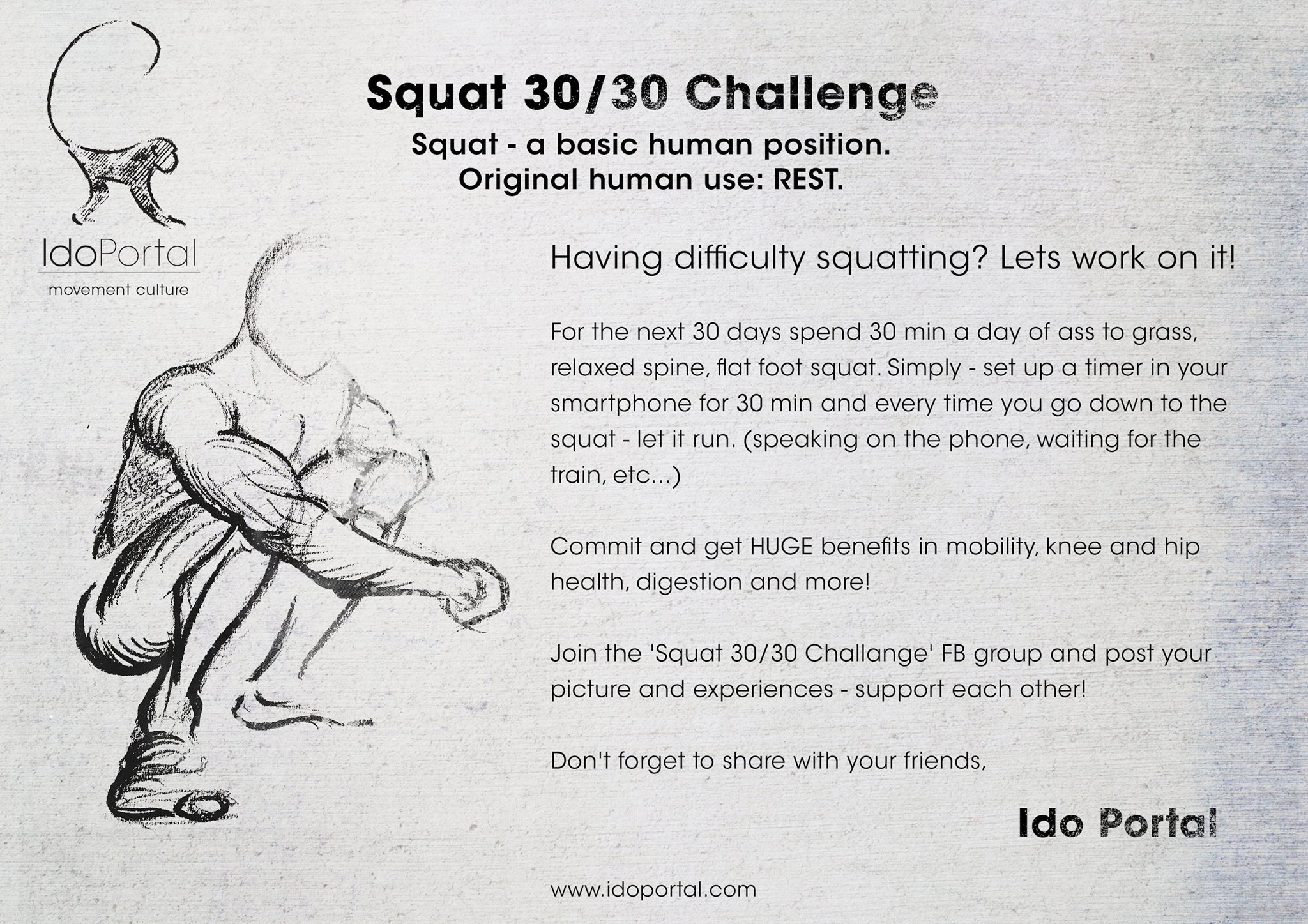
If you have kids, let them play around at the park while you alternate your time between reading or watching in a squat, practicing your handstand and hanging and swinging on the monkey bars. Watch what your kids do and copy them, as they usually excel in natural movement patterns. Everyone will assume you're a great parent because you're playing at the park with your kids while you get some much needed exercise in the sun.
Take a Hike
One great thing about nicer weather is the hiking. If you're by yourself or if your hiking companies don't mind too much, select a medium-sized rock and carry as you walk for a while. You can put it on your shoulder, bear hug it, even hold it overhead while you move along. Additionally you can sprint up the hills to get the legs fired up. Very little is as exhausting as running up hills. If you find a fallen branch, drag it along for a while, walking forward or backward. Climb up the trees on the trail, doing pullups on the branches. Jump from rock to rock. Move like an animal. If it's not too embarrassing, it's really fun and can be quite effective.
Electricity-free Yardwork
One thing I've enjoyed in this first year with our own yard is doing the yard work with as little technology as possible. We bought a push reel mower for the lawns. Our backyard is fairly large and it does take quite a while to mow the whole thing but it's great to be out in the sun getting some work in. While we took down a tree with a chainsaw, I made it possible to load into a trailer with just a pruning saw and some loppers. It was long work that required more of me than just using a chainsaw but I enjoyed it.
I'm sure there are many more ways to make the most of good weather. These are just a few ideas. Getting out in the sunshine, synthesizing that vitamin D and enjoying the fresh air should add some value to your overall training plan.
Monday, March 21, 2016
Four Questions
I think that often times when someone decides they're going to "get in shape" they simply join whichever gym is most convenient or cheapest and follow whatever restrictive fad diet has popped up. And for some people, this method works. For many others, however, this leads to issues like overexertion, boredom, anxiety, binging and, ultimately, quitting.
There is another way. I like to ask people to look at and think about the following four questions to help them get started:
1. What do you want to look like?
2. How do you want to feel?
3. What do you want to be able to do?
4. What are you willing to sacrifice for it?
What do you want to look like?
This question is perhaps the most vain of the four but I don't think there are many people who exercise without at least some hope of changing their physical appearance. I personally think there is nothing wrong with seeking to alter how you look. Do you want bigger shoulders or arms? Do you want a shapely "backside"? Do you want abs? Are you hoping to gain muscle? Lose fat? The answer to these types of questions will change what specific exercises you ought to do. You can't avoid resistance training (either with weights or your own body) if you hope to grow or accentuate muscle mass. You may see someone jogging for hours every week on a treadmill who wishes her glutes and legs looked more like a figure model's. She might not know that the figure model does squats and deadlifts regularly. These questions will also largely determine your nutrition plan. You can't hope to lose fat and eat a calorie surplus. You can't gain muscle if you're eating too little protein. Again, it's important to know what you want to look like.
How do you want to feel?
This one is a little bit harder to measure. I think this has a lot to do with nutrition. I know if I include lots of vegetables and high protein levels in my diet I feel fuller longer and generally healthier. I could eat the same amount of calories or macronutrients with junk food but I'd feel hungry and sluggish. I like to feel light and energetic. I also like to experience freedom in how I train. I don't mean free to change exercises on a whim but freedom of movement. Am I able to move with relatively ease between gymnastics and weightlifting? Can I help someone move without worrying about my grip, back or heart giving out? Can I go on a hike or a swim? That freedom of movement is one of the main drivers for my diverse approach to exercise.
What do you want to be able to do?
Sometimes I think when people think of exercise they see either a weight room or a row of treadmills, ellipticals and stationary bikes. A few more perhaps see a studio for yoga or aerobics or other classes. If those options work for you, great! But the world of movement, exercise, training and physical culture extends so much further beyond that. Another reason I take such a diverse approach to movement is because there are so many interesting activities to engage in. My son attends a local American Ninja Warrior gym called the Ninja Warehouse. They've got parkour, obstacle training and crazy grip strength challenges. It's outside of the typical gym atmosphere and it might just be fun and challenging enough to get you to stick with it. Another reason to determine what you want to be able to do is it determines what, where and how often you train. I'm a little obsessed with handstands and I know that in order to work effectively on my balance, I need to train handstands nearly everyday. Getting stronger in the deadlift, on the other hand, might actually mean training a variety of lifts to attack weak points. Once you understand what you want to be able to do, you can start to create a plan that you'll enjoy.
What are you willing to sacrifice for it?
This question can be posed many ways: How much pain are you willing to endure? (In the form of hard work, tedious repetitions and the like) What things are you willing to give up? (Out-of-control eating, an hour of sleep, closely following sports, etc.) Additionally, what are you not willing to give up? (Family time, job, pleasure reading, TV shows, sugar) No matter what your goal is there will likely be something you have to trade in order to achieve it. If you want six-pack abs, you will likely need to eat fewer calories. If you want to train for an Iron Man, you will likely sacrifice some sleep or some family time. If you aren't committed to your goal, you probably won't give up what you need to in order to achieve it. And that's okay! I like to ask this question so people can see what it will take to get where they want to be.
You can determine and take control of so many things related to your health and fitness. you just have to sit (or squat) down and figure it out. The more specific your goal is the more specific your planning will have to be. Feel free to ask me about it if you think I can help. Have fun.
There is another way. I like to ask people to look at and think about the following four questions to help them get started:
1. What do you want to look like?
2. How do you want to feel?
3. What do you want to be able to do?
4. What are you willing to sacrifice for it?
What do you want to look like?
This question is perhaps the most vain of the four but I don't think there are many people who exercise without at least some hope of changing their physical appearance. I personally think there is nothing wrong with seeking to alter how you look. Do you want bigger shoulders or arms? Do you want a shapely "backside"? Do you want abs? Are you hoping to gain muscle? Lose fat? The answer to these types of questions will change what specific exercises you ought to do. You can't avoid resistance training (either with weights or your own body) if you hope to grow or accentuate muscle mass. You may see someone jogging for hours every week on a treadmill who wishes her glutes and legs looked more like a figure model's. She might not know that the figure model does squats and deadlifts regularly. These questions will also largely determine your nutrition plan. You can't hope to lose fat and eat a calorie surplus. You can't gain muscle if you're eating too little protein. Again, it's important to know what you want to look like.
How do you want to feel?
This one is a little bit harder to measure. I think this has a lot to do with nutrition. I know if I include lots of vegetables and high protein levels in my diet I feel fuller longer and generally healthier. I could eat the same amount of calories or macronutrients with junk food but I'd feel hungry and sluggish. I like to feel light and energetic. I also like to experience freedom in how I train. I don't mean free to change exercises on a whim but freedom of movement. Am I able to move with relatively ease between gymnastics and weightlifting? Can I help someone move without worrying about my grip, back or heart giving out? Can I go on a hike or a swim? That freedom of movement is one of the main drivers for my diverse approach to exercise.
What do you want to be able to do?
Sometimes I think when people think of exercise they see either a weight room or a row of treadmills, ellipticals and stationary bikes. A few more perhaps see a studio for yoga or aerobics or other classes. If those options work for you, great! But the world of movement, exercise, training and physical culture extends so much further beyond that. Another reason I take such a diverse approach to movement is because there are so many interesting activities to engage in. My son attends a local American Ninja Warrior gym called the Ninja Warehouse. They've got parkour, obstacle training and crazy grip strength challenges. It's outside of the typical gym atmosphere and it might just be fun and challenging enough to get you to stick with it. Another reason to determine what you want to be able to do is it determines what, where and how often you train. I'm a little obsessed with handstands and I know that in order to work effectively on my balance, I need to train handstands nearly everyday. Getting stronger in the deadlift, on the other hand, might actually mean training a variety of lifts to attack weak points. Once you understand what you want to be able to do, you can start to create a plan that you'll enjoy.
What are you willing to sacrifice for it?
This question can be posed many ways: How much pain are you willing to endure? (In the form of hard work, tedious repetitions and the like) What things are you willing to give up? (Out-of-control eating, an hour of sleep, closely following sports, etc.) Additionally, what are you not willing to give up? (Family time, job, pleasure reading, TV shows, sugar) No matter what your goal is there will likely be something you have to trade in order to achieve it. If you want six-pack abs, you will likely need to eat fewer calories. If you want to train for an Iron Man, you will likely sacrifice some sleep or some family time. If you aren't committed to your goal, you probably won't give up what you need to in order to achieve it. And that's okay! I like to ask this question so people can see what it will take to get where they want to be.
You can determine and take control of so many things related to your health and fitness. you just have to sit (or squat) down and figure it out. The more specific your goal is the more specific your planning will have to be. Feel free to ask me about it if you think I can help. Have fun.
Saturday, March 12, 2016
Sources of Information, Part 3: Climbing
Part one on weightlifting is here and part two on gymnastics is here.
Climbing
A few years back I worked for a type of juvenile treatment center for just under a year. Though I strongly disliked the system used to manage the kids, I did enjoy the off-campus activities. One of them was my introduction to rock climbing. Having never really done much work with grip strength previously, climbing was difficult and somewhat painful. My hands felt raw after a session and my forearms would get pumped quickly. But I loved it. I'd watch the fluidity of the better climbers and be fascinated. I'd see them make dynamic, powerful moves and be so impressed. Climbing seemed to me a highly artistic style of movement and I wanted to absorb it. Additionally, it provided a strong connection to gymnastics strength and complemented the pushing involved in handstands and the like. These are my resources for climbing:
The Front Climbing Club - I mainly climb indoors. It's just easier and more convenient. And I really lucked out to have a world-class facility close by in which to do my "plastic pulling." I almost exclusive boulder, which is a style of climbing that uses no ropes or harnesses and is generally not as high off the ground. The routes are shorter and often require more power, which I think suits me. And though I enjoy climbing with others, it doesn't require me to climb with anybody else. As I'm often at the gym at 6am, usually it's just me and the wall. The staff here is so helpful and new routes seem to go up every week or every other week so there are always new challenges. I just love this place.
The Rock Climber's Training Manual - If you haven't already gathered this about me, know that I enjoy having a program to follow. I like to know how to progress, I crave organization in my training and yearn for the grind associated with dedicated programming. This book offers that to me. After about two years of just climbing, I felt like I was stalling in my progress. I wanted to work with hangboards (for strength) and campus boards (for power) but didn't know how to use them. The book details how to progress through these and other different training blocks in order to guide you to improved climbing. It helps you find weak points and attack them directly. I can now finally see myself progressing again.
I've met so many interesting people in the world of climbing and constantly try to bring others to try it out. It is fun. And it gets more fun the more you go. If you want to come climb with me, by all means, let me know. Next, in what I thought might be a glimpse into my aggressive side, I discover the arena of martial arts...
Climbing
A few years back I worked for a type of juvenile treatment center for just under a year. Though I strongly disliked the system used to manage the kids, I did enjoy the off-campus activities. One of them was my introduction to rock climbing. Having never really done much work with grip strength previously, climbing was difficult and somewhat painful. My hands felt raw after a session and my forearms would get pumped quickly. But I loved it. I'd watch the fluidity of the better climbers and be fascinated. I'd see them make dynamic, powerful moves and be so impressed. Climbing seemed to me a highly artistic style of movement and I wanted to absorb it. Additionally, it provided a strong connection to gymnastics strength and complemented the pushing involved in handstands and the like. These are my resources for climbing:
The Front Climbing Club - I mainly climb indoors. It's just easier and more convenient. And I really lucked out to have a world-class facility close by in which to do my "plastic pulling." I almost exclusive boulder, which is a style of climbing that uses no ropes or harnesses and is generally not as high off the ground. The routes are shorter and often require more power, which I think suits me. And though I enjoy climbing with others, it doesn't require me to climb with anybody else. As I'm often at the gym at 6am, usually it's just me and the wall. The staff here is so helpful and new routes seem to go up every week or every other week so there are always new challenges. I just love this place.
The Rock Climber's Training Manual - If you haven't already gathered this about me, know that I enjoy having a program to follow. I like to know how to progress, I crave organization in my training and yearn for the grind associated with dedicated programming. This book offers that to me. After about two years of just climbing, I felt like I was stalling in my progress. I wanted to work with hangboards (for strength) and campus boards (for power) but didn't know how to use them. The book details how to progress through these and other different training blocks in order to guide you to improved climbing. It helps you find weak points and attack them directly. I can now finally see myself progressing again.
I've met so many interesting people in the world of climbing and constantly try to bring others to try it out. It is fun. And it gets more fun the more you go. If you want to come climb with me, by all means, let me know. Next, in what I thought might be a glimpse into my aggressive side, I discover the arena of martial arts...
Monday, February 29, 2016
Simple Conditioning Programming
If you missed my post on strength training, it's right here.
Conditioning, endurance training, aerobic capacity, whatever you want to call it. To me, these things are all about training the energy system that can withstand outputs longer than 30-90 seconds. I feel like my grasp on the science related to this is constantly challenged. To be honest, I never had any interest in aerobic training until I started practicing martial arts (blog entry forthcoming). Some people prefer high-intensity all the time, some like to periodize their conditioning and still others only ever explore low-intensity steady state. In order to (hopefully) simplify the idea, I'm going to offer a basic template for programming aerobic training.
Day A - Long distance, low-intensity steady state work.
Day B - High intensity, interval style work or circuit training.
I know there are varying intensities and further complexities but I want this to be easy.
For long distance, low-intensity steady state work simply choose a modality that you like and do it non-stop for 20-90 minutes, depending on your goals, capacity and desire. Some options are: running, cycling, swimming, skipping rope, rowing, hiking, shadow boxing or any other activity you can maintain for the desired time at a relatively constant rate. Get a heart rate monitor if that helps you know if your intensity is too high or too low. Don't overthink this and just get out there.
For high-intensity intervals (HIIT) or circuit training, you are concerned with work to rest ratios. I've seen 1:1, 2:1 and even 3:1 work to rest ratios. An easy (as in, not complex) HIIT workout is this: Jog/Walk for 30 seconds, Sprint for 30 seconds, Repeat 6-10 times. It's mentally challenging as well as physically. It's important that you are sprinting hard during the sprints. You could perform the same basic workout on a track with measurable distances: Jog/Walk the curves (100 meters), Sprint the Straightaways (100 meters), Repeat 4 times around the track.
For HIIT or circuit training you can do all the same exercise (all sprints, for example) or vary them (first burpees, then sprints, followed by pushups and then squats for 4 rounds). This is another one not to overthink. There is no perfect workout. Sprinting is easy, requires only space and is effective. Hill sprints are fun (in a brutal sort of way) and you'll never become too fit to do them. But feel free to pick and choose from any number of exercises you like. The larger the number and size of muscles used in the circuit or interval, the harder it will be. In a good way. Learn to love that feeling and you'll have the consistency to make HIIT work for you.
I hope I made that simple enough. It requires work, consistently applied, but the results are fantastic.
Conditioning, endurance training, aerobic capacity, whatever you want to call it. To me, these things are all about training the energy system that can withstand outputs longer than 30-90 seconds. I feel like my grasp on the science related to this is constantly challenged. To be honest, I never had any interest in aerobic training until I started practicing martial arts (blog entry forthcoming). Some people prefer high-intensity all the time, some like to periodize their conditioning and still others only ever explore low-intensity steady state. In order to (hopefully) simplify the idea, I'm going to offer a basic template for programming aerobic training.
Day A - Long distance, low-intensity steady state work.
Day B - High intensity, interval style work or circuit training.
I know there are varying intensities and further complexities but I want this to be easy.
For long distance, low-intensity steady state work simply choose a modality that you like and do it non-stop for 20-90 minutes, depending on your goals, capacity and desire. Some options are: running, cycling, swimming, skipping rope, rowing, hiking, shadow boxing or any other activity you can maintain for the desired time at a relatively constant rate. Get a heart rate monitor if that helps you know if your intensity is too high or too low. Don't overthink this and just get out there.
For high-intensity intervals (HIIT) or circuit training, you are concerned with work to rest ratios. I've seen 1:1, 2:1 and even 3:1 work to rest ratios. An easy (as in, not complex) HIIT workout is this: Jog/Walk for 30 seconds, Sprint for 30 seconds, Repeat 6-10 times. It's mentally challenging as well as physically. It's important that you are sprinting hard during the sprints. You could perform the same basic workout on a track with measurable distances: Jog/Walk the curves (100 meters), Sprint the Straightaways (100 meters), Repeat 4 times around the track.
For HIIT or circuit training you can do all the same exercise (all sprints, for example) or vary them (first burpees, then sprints, followed by pushups and then squats for 4 rounds). This is another one not to overthink. There is no perfect workout. Sprinting is easy, requires only space and is effective. Hill sprints are fun (in a brutal sort of way) and you'll never become too fit to do them. But feel free to pick and choose from any number of exercises you like. The larger the number and size of muscles used in the circuit or interval, the harder it will be. In a good way. Learn to love that feeling and you'll have the consistency to make HIIT work for you.
I hope I made that simple enough. It requires work, consistently applied, but the results are fantastic.
Monday, February 22, 2016
If Change Were Easy, We'd All Be Fit, Debt-Free and Well-Educated
When I was younger I, like many others, had an over-inflated sense of my capacity, especially my athletic abilities. I was out of touch with what it took to develop excellence in anything I tried. I was one of those boys described in the book Boys Adrift by Leonard Sax. The truth is I didn't achieve excellence in anything because I did so little to develop any natural talent I had. In my head, however, I knew that if I just cared I'd be great. It's a difficult mindset to explain so I'll give an example:
In college, I saw a video of a climber doing several one-arm pullups on a climbing wall. I specifically recall thinking that I could do that. What?!? Where did that confidence come from? Why did I think I could come even close to that achieving that feat? And why didn't I just go do it if it was so easy?
I can't explain the psychology behind that assumption of mine but I can tell you that I now know (at least a little better) how much time and training that feat required. In order to achieve that level of pulling strength I was going to have to change so many things I was doing at that time. And guess what: change is NOT easy. It just isn't.
Here is a short(ish) list of traits I've had to accept in order to help me to realize change:
Discipline. I found that no matter how passionate I am about a goal, there are days and sometimes weeks wherein I do not want to train. My motivation will wane and I just won't feel like getting my workout in. I have to be disciplined. I have to do my scheduled workout, even when I don't feel like it. Progress does not come from dreams alone. You have to get the work in according to your plan.
Effort. And speaking of work, you cannot overcome your current level of ability without effort. Muscles, tendons, ligaments, and the like all respond to stress. This response strengthens muscles and other tissues. Even just maintaining strength and skills requires ongoing effort. You will simply atrophy and regress without work. When you see success, you must understand the total amount of work needed to achieve it was substantial. Nothing overcomes inertia in our increasingly quick-fix society like action.
Consistency. Closely linked to the first two traits is consistency. Consistency, like discipline, shows commitment. It can be easy to follow through on some desire for a week or two. The real progress in attaining a goal is in the day in and day out effort accumulated over a long period of time. It seems that with training, the results are often not linear, like a set of stairs. Often we experience plateaus followed by surges. The only way to reach those surges, which can bring exponential results, is by constantly exposing yourself to stress. This repeated effort over time strengthens your base and allows you to reach higher heights, bursting through the plateau. As I've said before, even a poor program can yield great results if the training is done consistently.
Tenacity. If you can be 100% consistent with no failures of any sort, I applaud you. I am not that way. Sometimes I'll slip and make an excuse. Sometimes I'll keep rationalizing and justifying for some time. Tenacity is the ability to pick yourself back up and get going again. It's persistence in the face of obstacles. I have to teach myself to show stubborn doggedness to work through those slips and excuses and hopefully, in time, avoid them altogether. It's also showing grit in tough times, like during a particularly grueling workout, showing a determination to finish what you've set out to do. I fall short, early and often. But I look to work to make that less and less true of myself.
Patience. One aspect of training that used to irritate me to no end is that, as obsessive as I am and have been about exercise, there are so many people, much less engrossed than I, who are stronger, more skilled and generally fitter. Sometimes it seems as if even people with less total training time under their belt than I have develop capacities with relative ease. I have since worked to develop my patience and realize that I'm not competing against these people. I'm competing against myself. Mastery takes time, longer for some than for others. Developing tendon strength is slower than developing muscular strength. Mobility is improved centimeters at a time. There is great wisdom in Aesop's fable "The Tortoise and the Hare."
Humility. Check your ego at the door. At Mushin Academy, where I do my martial arts training, this principle is critical to your continued success. You must learn to appreciate fundamental drilling, realizing that you likely have NOT mastered the most basic of moves. This strikes at the heart of my above mentioned issues. I often think I'm right and the best no matter the question. It has taken several instances of being shown I was wrong and inferior for me to start to lower my over-developed self-assurance. The more humble I try to be, the faster I learn and the more I learn.
In some ways, all of these traits are saying the same thing using different words. I may be long-winded but make no mistake: Change is NOT easy. It can be downright demotivating to learn that. But action will help you overcome these obstacles. Change things one at a time. Apply discipline, consistent effort. Be patient with yourself. Be tenacious. Change will come over time if you keep after it. Let this be the time you DO follow through and, ultimately, achieve your goal.
In college, I saw a video of a climber doing several one-arm pullups on a climbing wall. I specifically recall thinking that I could do that. What?!? Where did that confidence come from? Why did I think I could come even close to that achieving that feat? And why didn't I just go do it if it was so easy?
I can't explain the psychology behind that assumption of mine but I can tell you that I now know (at least a little better) how much time and training that feat required. In order to achieve that level of pulling strength I was going to have to change so many things I was doing at that time. And guess what: change is NOT easy. It just isn't.
Here is a short(ish) list of traits I've had to accept in order to help me to realize change:
Discipline. I found that no matter how passionate I am about a goal, there are days and sometimes weeks wherein I do not want to train. My motivation will wane and I just won't feel like getting my workout in. I have to be disciplined. I have to do my scheduled workout, even when I don't feel like it. Progress does not come from dreams alone. You have to get the work in according to your plan.
Effort. And speaking of work, you cannot overcome your current level of ability without effort. Muscles, tendons, ligaments, and the like all respond to stress. This response strengthens muscles and other tissues. Even just maintaining strength and skills requires ongoing effort. You will simply atrophy and regress without work. When you see success, you must understand the total amount of work needed to achieve it was substantial. Nothing overcomes inertia in our increasingly quick-fix society like action.
Consistency. Closely linked to the first two traits is consistency. Consistency, like discipline, shows commitment. It can be easy to follow through on some desire for a week or two. The real progress in attaining a goal is in the day in and day out effort accumulated over a long period of time. It seems that with training, the results are often not linear, like a set of stairs. Often we experience plateaus followed by surges. The only way to reach those surges, which can bring exponential results, is by constantly exposing yourself to stress. This repeated effort over time strengthens your base and allows you to reach higher heights, bursting through the plateau. As I've said before, even a poor program can yield great results if the training is done consistently.
Tenacity. If you can be 100% consistent with no failures of any sort, I applaud you. I am not that way. Sometimes I'll slip and make an excuse. Sometimes I'll keep rationalizing and justifying for some time. Tenacity is the ability to pick yourself back up and get going again. It's persistence in the face of obstacles. I have to teach myself to show stubborn doggedness to work through those slips and excuses and hopefully, in time, avoid them altogether. It's also showing grit in tough times, like during a particularly grueling workout, showing a determination to finish what you've set out to do. I fall short, early and often. But I look to work to make that less and less true of myself.
Patience. One aspect of training that used to irritate me to no end is that, as obsessive as I am and have been about exercise, there are so many people, much less engrossed than I, who are stronger, more skilled and generally fitter. Sometimes it seems as if even people with less total training time under their belt than I have develop capacities with relative ease. I have since worked to develop my patience and realize that I'm not competing against these people. I'm competing against myself. Mastery takes time, longer for some than for others. Developing tendon strength is slower than developing muscular strength. Mobility is improved centimeters at a time. There is great wisdom in Aesop's fable "The Tortoise and the Hare."
Humility. Check your ego at the door. At Mushin Academy, where I do my martial arts training, this principle is critical to your continued success. You must learn to appreciate fundamental drilling, realizing that you likely have NOT mastered the most basic of moves. This strikes at the heart of my above mentioned issues. I often think I'm right and the best no matter the question. It has taken several instances of being shown I was wrong and inferior for me to start to lower my over-developed self-assurance. The more humble I try to be, the faster I learn and the more I learn.
In some ways, all of these traits are saying the same thing using different words. I may be long-winded but make no mistake: Change is NOT easy. It can be downright demotivating to learn that. But action will help you overcome these obstacles. Change things one at a time. Apply discipline, consistent effort. Be patient with yourself. Be tenacious. Change will come over time if you keep after it. Let this be the time you DO follow through and, ultimately, achieve your goal.
Tuesday, February 16, 2016
(Almost) 100 Days Until Summer
As of this Sunday, February 21st, there will be 100 days left until Memorial Day, the unofficial start of summer. Often we all have goals related to how we want our bodies to look on that day when we get into our swimsuits to cool off at the pool (or often, for us, the splash pad). I know there are all sorts of reasons we shouldn't be concerned with how we look. We should all focus more fully on our character development, health status and service to others. But I think we can work on all of those aspects and still worry about how to shed the winter bulk we've accumulated. Doing anything specific and difficult for 100 days requires tenacity and discipline both of which are essential for achieving any worthwhile goal. Take these 100 days to develop those attributes while still working on your physique. Here are a few suggestions:
100 Burpees a Day. Check out this blog post on rosstraining.com. This lady did 100 burpees a day for a year. You can handle 100 days. I started this challenge once and made it to day 23. I got extremely sick (unrelated to the challenge, fully related to a sick niece) and never picked it back up. I've read it's good to both tell other people your goals and to keep them to yourself. So, who knows? Maybe you should tell somebody you're trying it or maybe keep it to yourself. In a standard burpee you start out standing straight up, squat down until your hands touch the floor, kick your legs out straight so you're in a plank position, bring them back in to a squat, and stand up. You can create different variations (add a pushup, pullup, weights, jumps, etc.). You can be strict on form or flop down and whip up. You can do them all in one session or throughout the day. You create the rules for yourself depending on what you hope to accomplish with the challenge. You just do it for 100 days.
Squat Everyday. There are various ways to approach this challenge. There are books and articles written about it. Some people have dedicated their foreseeable future on this idea. You can either max out everyday like some people in this program or just do working sets moving through different rep ranges. You can incorporate front squats or just stick with back squats. Again, it's your call and depends on your goals. I learned about John Broz on Youtube a few years back and squatted to a daily max everyday (often twice a day) for about six months. My back squat went from 130 kg (286 lbs) to 160 kg (352 lbs) and my front squat from 115 kg (253 lbs) to 140 kg (308 lbs). I also saw gains in every other lift in did, regardless of how often I attempted those lifts. Some days you feel terrible and some days you feel great. It's fun in a weird way. I'd personally follow schemes that involve a lot more working sets between 70-85% but others far stronger than me have found success with the daily max method.
No Sugar. If you thought doing some squats or burpees for 100 days would be tough, those seem fairly straightforward compared with this challenge. I've done Paleo and Whole30 challenges but I've never gone that long without added sugar. If your challenge is related to training you only have to do it for one session during the day. That could be as little as 5 minutes (if you have some great conditioning for burpees) or as much as an hour (working up to your squat max and doing some working sets). With a no sugar challenge, you never get a break until you're asleep. You have to decline all sorts of free and tempting food. I've got no problem with sugary treats but if they dictate your life, this may be a good challenge for you. This one requires significant planning and control. You could remove all sugar not found in vegetables or just stick to added sugar. You could create a variation in which you only get sugar within the hour after you've done your training session (a la carbohydrate backloading). Or you could give yourself an hour long cheat one time per week wherein you binge and feel terrible enough not to do it again for a week. Whatever you do, you simply try to eliminate the control sugar has over you, or "slay the sugar dragon."
This is by no means a comprehensive list of all the possible challenges you can do. I like challenges like this because it gives you some guidance and experience with a tough fitness or nutrition principle without having to take some crazy life-long stance. Maybe it would be a springboard to better physique, health or athleticism. You'll likely be closer to whatever goal you have for your summer body. You may find that you enjoy it along the way.
If you're thinking to do something and want some encouragement throughout the 100 days, let me know and I'll offer whatever I can.
100 Burpees a Day. Check out this blog post on rosstraining.com. This lady did 100 burpees a day for a year. You can handle 100 days. I started this challenge once and made it to day 23. I got extremely sick (unrelated to the challenge, fully related to a sick niece) and never picked it back up. I've read it's good to both tell other people your goals and to keep them to yourself. So, who knows? Maybe you should tell somebody you're trying it or maybe keep it to yourself. In a standard burpee you start out standing straight up, squat down until your hands touch the floor, kick your legs out straight so you're in a plank position, bring them back in to a squat, and stand up. You can create different variations (add a pushup, pullup, weights, jumps, etc.). You can be strict on form or flop down and whip up. You can do them all in one session or throughout the day. You create the rules for yourself depending on what you hope to accomplish with the challenge. You just do it for 100 days.
Squat Everyday. There are various ways to approach this challenge. There are books and articles written about it. Some people have dedicated their foreseeable future on this idea. You can either max out everyday like some people in this program or just do working sets moving through different rep ranges. You can incorporate front squats or just stick with back squats. Again, it's your call and depends on your goals. I learned about John Broz on Youtube a few years back and squatted to a daily max everyday (often twice a day) for about six months. My back squat went from 130 kg (286 lbs) to 160 kg (352 lbs) and my front squat from 115 kg (253 lbs) to 140 kg (308 lbs). I also saw gains in every other lift in did, regardless of how often I attempted those lifts. Some days you feel terrible and some days you feel great. It's fun in a weird way. I'd personally follow schemes that involve a lot more working sets between 70-85% but others far stronger than me have found success with the daily max method.
No Sugar. If you thought doing some squats or burpees for 100 days would be tough, those seem fairly straightforward compared with this challenge. I've done Paleo and Whole30 challenges but I've never gone that long without added sugar. If your challenge is related to training you only have to do it for one session during the day. That could be as little as 5 minutes (if you have some great conditioning for burpees) or as much as an hour (working up to your squat max and doing some working sets). With a no sugar challenge, you never get a break until you're asleep. You have to decline all sorts of free and tempting food. I've got no problem with sugary treats but if they dictate your life, this may be a good challenge for you. This one requires significant planning and control. You could remove all sugar not found in vegetables or just stick to added sugar. You could create a variation in which you only get sugar within the hour after you've done your training session (a la carbohydrate backloading). Or you could give yourself an hour long cheat one time per week wherein you binge and feel terrible enough not to do it again for a week. Whatever you do, you simply try to eliminate the control sugar has over you, or "slay the sugar dragon."
This is by no means a comprehensive list of all the possible challenges you can do. I like challenges like this because it gives you some guidance and experience with a tough fitness or nutrition principle without having to take some crazy life-long stance. Maybe it would be a springboard to better physique, health or athleticism. You'll likely be closer to whatever goal you have for your summer body. You may find that you enjoy it along the way.
If you're thinking to do something and want some encouragement throughout the 100 days, let me know and I'll offer whatever I can.
Thursday, February 11, 2016
Sources of Information, Part 2: Gymnastics
Not that it was very long ago but part one is here.
Gymnastics
I cannot remember specifically how I became introduced to gymnastics. My fascination with handstands ran fairly deep but I never seriously entertained the idea that I could become very proficient in them. I amused myself with various videos and found a youtube channel by the Strength Project. The channel highlight elements of gymnastics, parkour, tricking and the like. I became enamored with the gymnastic skill of the planche. I sought out progressions for this skill and was overloaded with the available resources out there. In all my searching, I found these resources worked well for what I was after:
Gymnastic Bodies - This is my main resources for all my gymnastic strength training. While I was learning about their system they introduced an elaborate progression structure where they produced various courses I use: Foundation (consisting of seven foundational elements: front lever, straddle planche, side lever, manna, single leg squat, hollowback press and rope climb), Handstand (first freestanding, then press handstand followed by one-arm handstand) and Stretch (with front splits, middle splits and thoracic bridge). I spent an inordinate amount of time perusing their forum, much of which is freely accessed, and loved getting deeply into the discussions.
Gold Medal Bodies - Though I do not use their programs (which have expanded since I was looking them) this group of athletes are an energetic crew with less of an elitist attitude about themselves. Had I not already invested a substantial amount in the aforementioned Gymnastic Bodies curriculum, I would love to see what this group offers more specifically. They do have various free articles and tutorials. My first handstand tutorial was one I received for free from them and it's great!
Yuri Marmerstein - I heard about Yuri through the Gymnastic Bodies forum and knew he was a teacher of handstands. As I mentioned before, I've always loved handstands and I wanted to know what Yuri could teach. Though I already had two other handstand programs and tutorials, I purchased Yuri's ebook Balancing the Equation. Though the specific progressions are similar to other products I had, Yuri's ability to explain elements and help troubleshoot through sticking points was unparalleled and at a fraction of the cost. I felt like a few things he focused on were just what I needed to better understand balancing on my hands. He seems like a great guy and I hope to have him to Utah for a seminar if I could garner enough committed interest.
I am by no means a master of anything related to gymnastic strength. I am constantly mesmerized by the abilities of other athletes in this realm. But much of what these programs and instructors teach is within reach for any disciplined learner. Gymnastic strength is probably my highest priority in my training because of the freedom of movement it offers. As a complement to the wealth and abundance within gymnastics, I next explore the world of unfamiliar words like crimps, cruxes, gastons, jugs, lock-offs and slopers found in climbing...
Gymnastics
I cannot remember specifically how I became introduced to gymnastics. My fascination with handstands ran fairly deep but I never seriously entertained the idea that I could become very proficient in them. I amused myself with various videos and found a youtube channel by the Strength Project. The channel highlight elements of gymnastics, parkour, tricking and the like. I became enamored with the gymnastic skill of the planche. I sought out progressions for this skill and was overloaded with the available resources out there. In all my searching, I found these resources worked well for what I was after:
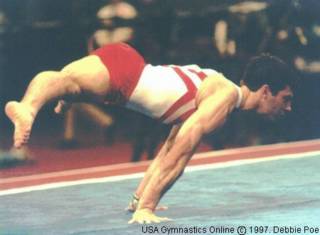
Gymnastic Bodies - This is my main resources for all my gymnastic strength training. While I was learning about their system they introduced an elaborate progression structure where they produced various courses I use: Foundation (consisting of seven foundational elements: front lever, straddle planche, side lever, manna, single leg squat, hollowback press and rope climb), Handstand (first freestanding, then press handstand followed by one-arm handstand) and Stretch (with front splits, middle splits and thoracic bridge). I spent an inordinate amount of time perusing their forum, much of which is freely accessed, and loved getting deeply into the discussions.
Gold Medal Bodies - Though I do not use their programs (which have expanded since I was looking them) this group of athletes are an energetic crew with less of an elitist attitude about themselves. Had I not already invested a substantial amount in the aforementioned Gymnastic Bodies curriculum, I would love to see what this group offers more specifically. They do have various free articles and tutorials. My first handstand tutorial was one I received for free from them and it's great!
Yuri Marmerstein - I heard about Yuri through the Gymnastic Bodies forum and knew he was a teacher of handstands. As I mentioned before, I've always loved handstands and I wanted to know what Yuri could teach. Though I already had two other handstand programs and tutorials, I purchased Yuri's ebook Balancing the Equation. Though the specific progressions are similar to other products I had, Yuri's ability to explain elements and help troubleshoot through sticking points was unparalleled and at a fraction of the cost. I felt like a few things he focused on were just what I needed to better understand balancing on my hands. He seems like a great guy and I hope to have him to Utah for a seminar if I could garner enough committed interest.
I am by no means a master of anything related to gymnastic strength. I am constantly mesmerized by the abilities of other athletes in this realm. But much of what these programs and instructors teach is within reach for any disciplined learner. Gymnastic strength is probably my highest priority in my training because of the freedom of movement it offers. As a complement to the wealth and abundance within gymnastics, I next explore the world of unfamiliar words like crimps, cruxes, gastons, jugs, lock-offs and slopers found in climbing...
Tuesday, February 2, 2016
Simple Strength Programming
Creating a program for strength training can be as complex as you like. For some people, complexity fuels their desire to complete each session. For others, complexity makes them feel lost and confused. You can find hundreds of thousands of programs that all claim to be the most excellent and brilliant training tool. I find, however, that a simple program done consistently will help many people. Here is one example that I like (I'm sure I read this somewhere else, if it's your program, let me know):
1. Squat
2. Upper Body Push
3. Deadlift
4. Upper Body Pull
I love this simple template because it hits most of the major muscle groups. It isn't as short as Pavel Tsatsouline's Power to the People program, but it's close.
(You can google all of these exercises)
Squat
Choose either a front squat or a back squat.
Upper Body Push
Choose either the bench press or the overhead press.
Deadlift
Choose either conventional or sumo deadlift.
Upper Body Pull
Choose either a barbell row or pullups
This is by no means an exhaustive list of the potential exercises in each category. With the exception of the pullup you just need a barbell, some place from which to squat and weights. That's it. If you go to a commercial gym they should have all of those items (excepting Planet Fitness, maybe. I don't get that place). For pullups there is probably a bar somewhere there. Or find a playground. If you don't, come over to my house and we can bang out a few sets.
When it comes to sets and reps, there are also many opinions about what constitutes bodybuilding vs pure strength vs endurance. I think there is benefit to mixing up the repetitions between 2 and 12. I like to divide it up easily like this:
Month 1: Sets of 10-12
Month 2: Sets of 6-8
Month 3: Sets of 4-5
Month 4: Sets of 2-3
Find a weight that challenges you on the last rep of the last set. Once you feel like you could get another rep on each set (maybe even do that rep) up the weight by 5-10 pounds. Get it a total of 15-30 reps (3 sets of 5 reps, 2 sets of 10 reps, 8 sets of 2 reps, etc.).
I believe that even a poor program done consistently will yield fantastic results. As you become consistent in your training, feel free to experiment. Look at your goals and assess your program based on your needs. Remember, this is only one type of program. If lifting weights at a commercial gym doesn't excite you in any way, do something different. Use the internet or other resources to plan. Also, feel free to ask me anything about what I think about a program or training style.
My next simple programming advice with deal with conditioning (or endurance or aerobic capacity or whatever you want to call it).
1. Squat
2. Upper Body Push
3. Deadlift
4. Upper Body Pull
I love this simple template because it hits most of the major muscle groups. It isn't as short as Pavel Tsatsouline's Power to the People program, but it's close.
(You can google all of these exercises)
Squat
Choose either a front squat or a back squat.
Upper Body Push
Choose either the bench press or the overhead press.
Deadlift
Choose either conventional or sumo deadlift.
Upper Body Pull
Choose either a barbell row or pullups
This is by no means an exhaustive list of the potential exercises in each category. With the exception of the pullup you just need a barbell, some place from which to squat and weights. That's it. If you go to a commercial gym they should have all of those items (excepting Planet Fitness, maybe. I don't get that place). For pullups there is probably a bar somewhere there. Or find a playground. If you don't, come over to my house and we can bang out a few sets.
When it comes to sets and reps, there are also many opinions about what constitutes bodybuilding vs pure strength vs endurance. I think there is benefit to mixing up the repetitions between 2 and 12. I like to divide it up easily like this:
Month 1: Sets of 10-12
Month 2: Sets of 6-8
Month 3: Sets of 4-5
Month 4: Sets of 2-3
Find a weight that challenges you on the last rep of the last set. Once you feel like you could get another rep on each set (maybe even do that rep) up the weight by 5-10 pounds. Get it a total of 15-30 reps (3 sets of 5 reps, 2 sets of 10 reps, 8 sets of 2 reps, etc.).
I believe that even a poor program done consistently will yield fantastic results. As you become consistent in your training, feel free to experiment. Look at your goals and assess your program based on your needs. Remember, this is only one type of program. If lifting weights at a commercial gym doesn't excite you in any way, do something different. Use the internet or other resources to plan. Also, feel free to ask me anything about what I think about a program or training style.
My next simple programming advice with deal with conditioning (or endurance or aerobic capacity or whatever you want to call it).
Tuesday, January 26, 2016
Developing a Strong Foundation
When constructing a building, it’s important to assess how
strong your foundation must be. I’m not going to pretend I know a whole lot
about this and if my information is off, let me know. The basic idea as I
understand it is that the higher your building, the stronger your foundation must
be. The difference in foundational thickness, area and integrity varies
depending on the size of the building. A shed and a skyscraper just do not have
the same needs when calculating their foundation. In like manner, you don’t see
tall mountains or trees with weak, narrow bases.
Some people are inspired by videos, pictures or training
programs of skilled athletes. They want to run out and copy their program or
try to do their special trick or skill. They then often lose hope when they are
unable to replicate it or their progress stalls more abruptly than they had
anticipated. What cannot be adequately demonstrated in the inspirational
material is the years of accumulated work done training the fundamentals. A
consistent devotion to foundational development widens and strengthens the
base. The wider the base, the higher the peak.
In many ways it is more fun to try something like a maximal
lift. You get yourself psyched up and pull, press or squat as much as you can.
Classic Soviet training programs, however, spend the majority of their time
training between 70-85%. Submaximal lifting allows tendons and other connective
tissue to adapt, so you can reach higher heights in your lifting. Additionally,
it’s more fun to just kick up and try to balance on your hands as long as you
can. You may gain some strength and balance (building a shed) but with proper
wrist prep, shoulder conditioning and body-line work you can progress to
seemingly inhuman variations of handstand pushups and presses (building a
skyscraper).
Take a look at your training and decide where your goals
are. If you have shed goals you’re probably already on the right track with
some possible touch ups here and there. If, however, you hope to work on skyscraper
goals you must make a patient, disciplined commitment to establishing a strong
foundation. Define and clarify your goals. Incorporate a strategy designed to achieve them.
Learn to pay the figurative price and tenaciously move in that direction, always counting your
failures as learning experiences. And enjoy the process.
Wednesday, January 20, 2016
Sources of Information, Part 1: Weightlifting
This is going to be the first in a series of hopefully
helpful sources on different aspects of movement and training.
I feel like my time in college studying Exercise Science was
beneficial for me because I learned basic principles about biology, physiology,
anatomy, and kinesiology. I also learned critical things about research and the scientific method. I do feel, however, that it was repetitive,
incomplete and biased in many ways. Had I not continued to study on my own and
allowed myself to open my mind to possibility that useful information existed
outside of the limited and difficult-to-practically-apply research journals, I
might never have found the various aspects of training I enjoy now. Here are
some resources I’ve used for weightlifting specifically:
Weightlifting
I
started weight training in college with the intention of getting “ripped”
and/or “jacked” like many male college students. While searching for
information on improving my athleticism along with getting ripped, I found at the a book at the university library called Bigger, Faster, Stronger by Greg Shepard. That was my introduction to power cleans. I became seriously obsessed with explosive power training utilizing the so-called Olympic lifts (though I think you are not allowed to market them using the term "olympic" now).
I started training them on my own but soon learned that one of the professors at my school was a certified coach. His name was Dr. Mike Waller and he helped us start a weightlifting club at the university. I got my first lessons from him and was hooked. For about 3 years I did very little beyond snatches, cleans, jerks and squats. I competed locally and had so much fun and met so many great people. Utah has a thriving community, only improved by Crossfit's inclusion of the sport. The resources I loved:
Pendlay Forum – I
bought a specialized weightlifting bar and weights from the Pendlay. Glenn
Pendlay is a weightlifting coach with great insight into the sport. The pendlay
forum has various threads discussing every conceivable question about
weightlifting. I would spend hours on that site learning from the community members and watching the Pendlay videos.
Frank Rothwell's Youtube Channel - Frank Rothwell has uploaded so many of the Olympic and World Weightlifting Championships by weight category. I used to just sit and watch the greats lift. I really feel it had an extremely positive impact on my technique. Not to mention it was so much fun.
These were my main sources of information on weightlifting. I loved the sport and spent a ridiculous amount of time learning, watching and training. It did grow stale after awhile and I sought to expand my movement repertoire. But it was instrumental in helping me understand discipline, patience and consistency in training. Up next, I try my hand at gymnastics...
Monday, January 11, 2016
Why I Don't Train for Health
I think the constant push to promote physical activity is
laudable. I love to move and hope more people will decide to do the same. I
think the approach, however, is insufficient and even misguided. All types of
leaders, officials, authorities, etc. almost exclusively promote exercise as a
way to improve health. Articles are written discussing ways to improve heart
function, boost immunity, combat diseases and so forth are all we see in the
media when attempting to convert the sedentary. It’s as if we’ve decided that
if we can get them to see how they’re damaging themselves, they will elect to
begin and persist in an exercise program. The problem is that’s been the message for a long time and little
is changing.
I believe that presenting the “health benefits of exercise”
as the central purpose for engaging in movement is inadequate. There are
probably some people who exercise just for the health benefits and need no
other motivation. But, as an avid exerciser, if the only thing I could get from
training were health benefits, I’d probably quit or train only off and on. I
think the reward of “health benefits” is unsatisfactory for at least two reasons:
1.
Adherence is based only on some vague,
indefinable marker.
2.
Exercise may not even prevent the onset of
disease or other health problems.
To be honest, I think I’ll probably develop cardiovascular
disease and diabetes and then die of a stroke at a young age in spite of all my
effort in exercise. Avoiding those ailments is hardly on my mind when I’m
training. In fact, it’s not even a top 5 reason for exercising. Here’s my list:
1.
Skill Acquisition & Development
2.
Athleticism
3.
Challenges
4.
Preparedness
5.
Aesthetics
Then, maybe:
6.
Health
Skill Acquisition
& Development
For me, top priority when it comes to movement is honing of skills.
I participate in bouldering, gymnastic-style bodyweight training and martial
arts not because I hope that my heart or joints are healthier because of these
activities but because they are skills I hope to develop. I climb regularly to
become a smooth, technical climber. I work through various bodyweight exercise
progressions in order to achieve handstands, planches and other gymnastic
skills. I attend jiu jitsu and thai boxing classes to learn and refine submissions,
escapes, attacks, combinations, and other drills. Again, I do not look for the health benefits of these activities first; I
enjoy learning the skills and love the freedom of movement they offer.
Athleticism
When I’m weightlifting, I do so with one primary goal: Strength!
When I jump rope, I do so with one primary goal: Endurance! When I sprint or
jump, I so do with one primary goal: Power! I want to stay as athletic and
competitive as I can. I know that I’ll begin to lose power, flexibility,
strength, endurance and agility as I get older. I know I can’t stop that process.
However, I love to compete and know that only through specific training can I
hope to maximize my potential in those categories. I plan to play sports and
enter other competitions for years to come and I don’t want to lose any more of
my athleticism than necessary.
Challenges
One thing for which I hope to be known and remembered is my
toughness. Some of my training is focused specifically on things that
intimidate me. I try to expose my weaknesses and come out a stronger person
because of that. Combat training always scares me (though not as much as it
used to). I’ve never been a fighter and was fearful upon realizing how ill
prepared I was for a fight. As I’ve attended classes and learned what styles
suit me and what I still need to improve, a sense of cool confidence has
surrounded me. Conditioning also makes me nervous. As I do the workouts, I’ve
learned to push myself beyond my perceived limits and not let myself quit when
I feel too tired or weak to go on. Not only does my endurance improve but my
mental toughness as well.
Preparedness
I don’t know what the future will bring. There could be some
post-apocalyptic scenario in which there will be limited electricity and
technology and mankind will rely on physical labor for food, shelter and the
like. I may need to help someone move heavy furniture. My family or I might be
attacked. There could be a disaster. I train to be prepared for these
scenarios. My training isn’t exactly specific to any of these possible
scenarios but I do plan some of my training with those types of events in mind.
I don’t want to be caught unawares.
Aesthetics
I want broad, muscular shoulders that show their width in
any shirt. I want to see veins on my abdominals through a compression shirt. I
want thick legs that struggle to get into my pants. I want forearms bigger than
most people’s arms. I want people to think my head looks small because my neck
is so thick and my traps almost touch my ears. I care more about how my
training makes me look than whether it prevents me from needing bypass surgery.
It’s vain. It’s narcissistic. It may even be an unhealthy fixation. But it’s
true.
Health
Exercising for health isn’t necessarily a bad idea. My
training will hopefully prevent disease, injury and premature death. I may have
some sort of event or change in my life that alters my perception of exercise.
Our modern lifestyle, however, does not require strength, mobility,
conditioning, skill or many of the other things that exercise might bring us.
With our technology we hardly ever need leave the comforts afforded us in our
homes. We need to identify other reasons to exercise. In all honesty, that’s
just my list of reasons for training.
I don’t want you to choose my reasons for training. You may
want to be an all-around movement generalist or maybe you’d rather be a specialist
(powerlifter, fighter, traceur, bodybuilder, triathlete). The point is to understand what makes
you tick. We all have potential to improve in any area we choose. Once you find
out what your passion is, training gets much easier and more enjoyable. You’ll
still need to be patient, consistent, determined and hard working to progress.
You may not enjoy all the obstacles that come along when striving to improve
but your vision won’t be as clouded nor will your incentive be as uninspiring.
I really want you to discover what makes you overcome the
overwhelming desire to sit on the couch and watch TV all day (or whatever makes
it hard for you to train). We can’t pick our passion in everything in life.
We’d probably have too many veterinarians and not enough garbage men if we
could. But we can pick our passion in exercise. We won’t all be at the elite
level and we may jump from one thing to another but the point is to enjoy the
process. I don’t think we will see a massive increase in active adults unless
we move the focus from health and transfer it to the motives and desires of
those adults. And then we might see improved health, longevity and well-being.
Subscribe to:
Posts (Atom)