If you missed my post on strength training, it's right here.
Conditioning, endurance training, aerobic capacity, whatever you want to call it. To me, these things are all about training the energy system that can withstand outputs longer than 30-90 seconds. I feel like my grasp on the science related to this is constantly challenged. To be honest, I never had any interest in aerobic training until I started practicing martial arts (blog entry forthcoming). Some people prefer high-intensity all the time, some like to periodize their conditioning and still others only ever explore low-intensity steady state. In order to (hopefully) simplify the idea, I'm going to offer a basic template for programming aerobic training.
Day A - Long distance, low-intensity steady state work.
Day B - High intensity, interval style work or circuit training.
I know there are varying intensities and further complexities but I want this to be easy.
For long distance, low-intensity steady state work simply choose a modality that you like and do it non-stop for 20-90 minutes, depending on your goals, capacity and desire. Some options are: running, cycling, swimming, skipping rope, rowing, hiking, shadow boxing or any other activity you can maintain for the desired time at a relatively constant rate. Get a heart rate monitor if that helps you know if your intensity is too high or too low. Don't overthink this and just get out there.
For high-intensity intervals (HIIT) or circuit training, you are concerned with work to rest ratios. I've seen 1:1, 2:1 and even 3:1 work to rest ratios. An easy (as in, not complex) HIIT workout is this: Jog/Walk for 30 seconds, Sprint for 30 seconds, Repeat 6-10 times. It's mentally challenging as well as physically. It's important that you are sprinting hard during the sprints. You could perform the same basic workout on a track with measurable distances: Jog/Walk the curves (100 meters), Sprint the Straightaways (100 meters), Repeat 4 times around the track.
For HIIT or circuit training you can do all the same exercise (all sprints, for example) or vary them (first burpees, then sprints, followed by pushups and then squats for 4 rounds). This is another one not to overthink. There is no perfect workout. Sprinting is easy, requires only space and is effective. Hill sprints are fun (in a brutal sort of way) and you'll never become too fit to do them. But feel free to pick and choose from any number of exercises you like. The larger the number and size of muscles used in the circuit or interval, the harder it will be. In a good way. Learn to love that feeling and you'll have the consistency to make HIIT work for you.
I hope I made that simple enough. It requires work, consistently applied, but the results are fantastic.
Monday, February 29, 2016

Monday, February 22, 2016
If Change Were Easy, We'd All Be Fit, Debt-Free and Well-Educated
When I was younger I, like many others, had an over-inflated sense of my capacity, especially my athletic abilities. I was out of touch with what it took to develop excellence in anything I tried. I was one of those boys described in the book Boys Adrift by Leonard Sax. The truth is I didn't achieve excellence in anything because I did so little to develop any natural talent I had. In my head, however, I knew that if I just cared I'd be great. It's a difficult mindset to explain so I'll give an example:
In college, I saw a video of a climber doing several one-arm pullups on a climbing wall. I specifically recall thinking that I could do that. What?!? Where did that confidence come from? Why did I think I could come even close to that achieving that feat? And why didn't I just go do it if it was so easy?
I can't explain the psychology behind that assumption of mine but I can tell you that I now know (at least a little better) how much time and training that feat required. In order to achieve that level of pulling strength I was going to have to change so many things I was doing at that time. And guess what: change is NOT easy. It just isn't.
Here is a short(ish) list of traits I've had to accept in order to help me to realize change:
Discipline. I found that no matter how passionate I am about a goal, there are days and sometimes weeks wherein I do not want to train. My motivation will wane and I just won't feel like getting my workout in. I have to be disciplined. I have to do my scheduled workout, even when I don't feel like it. Progress does not come from dreams alone. You have to get the work in according to your plan.
Effort. And speaking of work, you cannot overcome your current level of ability without effort. Muscles, tendons, ligaments, and the like all respond to stress. This response strengthens muscles and other tissues. Even just maintaining strength and skills requires ongoing effort. You will simply atrophy and regress without work. When you see success, you must understand the total amount of work needed to achieve it was substantial. Nothing overcomes inertia in our increasingly quick-fix society like action.
Consistency. Closely linked to the first two traits is consistency. Consistency, like discipline, shows commitment. It can be easy to follow through on some desire for a week or two. The real progress in attaining a goal is in the day in and day out effort accumulated over a long period of time. It seems that with training, the results are often not linear, like a set of stairs. Often we experience plateaus followed by surges. The only way to reach those surges, which can bring exponential results, is by constantly exposing yourself to stress. This repeated effort over time strengthens your base and allows you to reach higher heights, bursting through the plateau. As I've said before, even a poor program can yield great results if the training is done consistently.
Tenacity. If you can be 100% consistent with no failures of any sort, I applaud you. I am not that way. Sometimes I'll slip and make an excuse. Sometimes I'll keep rationalizing and justifying for some time. Tenacity is the ability to pick yourself back up and get going again. It's persistence in the face of obstacles. I have to teach myself to show stubborn doggedness to work through those slips and excuses and hopefully, in time, avoid them altogether. It's also showing grit in tough times, like during a particularly grueling workout, showing a determination to finish what you've set out to do. I fall short, early and often. But I look to work to make that less and less true of myself.
Patience. One aspect of training that used to irritate me to no end is that, as obsessive as I am and have been about exercise, there are so many people, much less engrossed than I, who are stronger, more skilled and generally fitter. Sometimes it seems as if even people with less total training time under their belt than I have develop capacities with relative ease. I have since worked to develop my patience and realize that I'm not competing against these people. I'm competing against myself. Mastery takes time, longer for some than for others. Developing tendon strength is slower than developing muscular strength. Mobility is improved centimeters at a time. There is great wisdom in Aesop's fable "The Tortoise and the Hare."
Humility. Check your ego at the door. At Mushin Academy, where I do my martial arts training, this principle is critical to your continued success. You must learn to appreciate fundamental drilling, realizing that you likely have NOT mastered the most basic of moves. This strikes at the heart of my above mentioned issues. I often think I'm right and the best no matter the question. It has taken several instances of being shown I was wrong and inferior for me to start to lower my over-developed self-assurance. The more humble I try to be, the faster I learn and the more I learn.
In some ways, all of these traits are saying the same thing using different words. I may be long-winded but make no mistake: Change is NOT easy. It can be downright demotivating to learn that. But action will help you overcome these obstacles. Change things one at a time. Apply discipline, consistent effort. Be patient with yourself. Be tenacious. Change will come over time if you keep after it. Let this be the time you DO follow through and, ultimately, achieve your goal.
In college, I saw a video of a climber doing several one-arm pullups on a climbing wall. I specifically recall thinking that I could do that. What?!? Where did that confidence come from? Why did I think I could come even close to that achieving that feat? And why didn't I just go do it if it was so easy?
I can't explain the psychology behind that assumption of mine but I can tell you that I now know (at least a little better) how much time and training that feat required. In order to achieve that level of pulling strength I was going to have to change so many things I was doing at that time. And guess what: change is NOT easy. It just isn't.
Here is a short(ish) list of traits I've had to accept in order to help me to realize change:
Discipline. I found that no matter how passionate I am about a goal, there are days and sometimes weeks wherein I do not want to train. My motivation will wane and I just won't feel like getting my workout in. I have to be disciplined. I have to do my scheduled workout, even when I don't feel like it. Progress does not come from dreams alone. You have to get the work in according to your plan.
Effort. And speaking of work, you cannot overcome your current level of ability without effort. Muscles, tendons, ligaments, and the like all respond to stress. This response strengthens muscles and other tissues. Even just maintaining strength and skills requires ongoing effort. You will simply atrophy and regress without work. When you see success, you must understand the total amount of work needed to achieve it was substantial. Nothing overcomes inertia in our increasingly quick-fix society like action.
Consistency. Closely linked to the first two traits is consistency. Consistency, like discipline, shows commitment. It can be easy to follow through on some desire for a week or two. The real progress in attaining a goal is in the day in and day out effort accumulated over a long period of time. It seems that with training, the results are often not linear, like a set of stairs. Often we experience plateaus followed by surges. The only way to reach those surges, which can bring exponential results, is by constantly exposing yourself to stress. This repeated effort over time strengthens your base and allows you to reach higher heights, bursting through the plateau. As I've said before, even a poor program can yield great results if the training is done consistently.
Tenacity. If you can be 100% consistent with no failures of any sort, I applaud you. I am not that way. Sometimes I'll slip and make an excuse. Sometimes I'll keep rationalizing and justifying for some time. Tenacity is the ability to pick yourself back up and get going again. It's persistence in the face of obstacles. I have to teach myself to show stubborn doggedness to work through those slips and excuses and hopefully, in time, avoid them altogether. It's also showing grit in tough times, like during a particularly grueling workout, showing a determination to finish what you've set out to do. I fall short, early and often. But I look to work to make that less and less true of myself.
Patience. One aspect of training that used to irritate me to no end is that, as obsessive as I am and have been about exercise, there are so many people, much less engrossed than I, who are stronger, more skilled and generally fitter. Sometimes it seems as if even people with less total training time under their belt than I have develop capacities with relative ease. I have since worked to develop my patience and realize that I'm not competing against these people. I'm competing against myself. Mastery takes time, longer for some than for others. Developing tendon strength is slower than developing muscular strength. Mobility is improved centimeters at a time. There is great wisdom in Aesop's fable "The Tortoise and the Hare."
Humility. Check your ego at the door. At Mushin Academy, where I do my martial arts training, this principle is critical to your continued success. You must learn to appreciate fundamental drilling, realizing that you likely have NOT mastered the most basic of moves. This strikes at the heart of my above mentioned issues. I often think I'm right and the best no matter the question. It has taken several instances of being shown I was wrong and inferior for me to start to lower my over-developed self-assurance. The more humble I try to be, the faster I learn and the more I learn.
In some ways, all of these traits are saying the same thing using different words. I may be long-winded but make no mistake: Change is NOT easy. It can be downright demotivating to learn that. But action will help you overcome these obstacles. Change things one at a time. Apply discipline, consistent effort. Be patient with yourself. Be tenacious. Change will come over time if you keep after it. Let this be the time you DO follow through and, ultimately, achieve your goal.
Tuesday, February 16, 2016
(Almost) 100 Days Until Summer
As of this Sunday, February 21st, there will be 100 days left until Memorial Day, the unofficial start of summer. Often we all have goals related to how we want our bodies to look on that day when we get into our swimsuits to cool off at the pool (or often, for us, the splash pad). I know there are all sorts of reasons we shouldn't be concerned with how we look. We should all focus more fully on our character development, health status and service to others. But I think we can work on all of those aspects and still worry about how to shed the winter bulk we've accumulated. Doing anything specific and difficult for 100 days requires tenacity and discipline both of which are essential for achieving any worthwhile goal. Take these 100 days to develop those attributes while still working on your physique. Here are a few suggestions:
100 Burpees a Day. Check out this blog post on rosstraining.com. This lady did 100 burpees a day for a year. You can handle 100 days. I started this challenge once and made it to day 23. I got extremely sick (unrelated to the challenge, fully related to a sick niece) and never picked it back up. I've read it's good to both tell other people your goals and to keep them to yourself. So, who knows? Maybe you should tell somebody you're trying it or maybe keep it to yourself. In a standard burpee you start out standing straight up, squat down until your hands touch the floor, kick your legs out straight so you're in a plank position, bring them back in to a squat, and stand up. You can create different variations (add a pushup, pullup, weights, jumps, etc.). You can be strict on form or flop down and whip up. You can do them all in one session or throughout the day. You create the rules for yourself depending on what you hope to accomplish with the challenge. You just do it for 100 days.
Squat Everyday. There are various ways to approach this challenge. There are books and articles written about it. Some people have dedicated their foreseeable future on this idea. You can either max out everyday like some people in this program or just do working sets moving through different rep ranges. You can incorporate front squats or just stick with back squats. Again, it's your call and depends on your goals. I learned about John Broz on Youtube a few years back and squatted to a daily max everyday (often twice a day) for about six months. My back squat went from 130 kg (286 lbs) to 160 kg (352 lbs) and my front squat from 115 kg (253 lbs) to 140 kg (308 lbs). I also saw gains in every other lift in did, regardless of how often I attempted those lifts. Some days you feel terrible and some days you feel great. It's fun in a weird way. I'd personally follow schemes that involve a lot more working sets between 70-85% but others far stronger than me have found success with the daily max method.
No Sugar. If you thought doing some squats or burpees for 100 days would be tough, those seem fairly straightforward compared with this challenge. I've done Paleo and Whole30 challenges but I've never gone that long without added sugar. If your challenge is related to training you only have to do it for one session during the day. That could be as little as 5 minutes (if you have some great conditioning for burpees) or as much as an hour (working up to your squat max and doing some working sets). With a no sugar challenge, you never get a break until you're asleep. You have to decline all sorts of free and tempting food. I've got no problem with sugary treats but if they dictate your life, this may be a good challenge for you. This one requires significant planning and control. You could remove all sugar not found in vegetables or just stick to added sugar. You could create a variation in which you only get sugar within the hour after you've done your training session (a la carbohydrate backloading). Or you could give yourself an hour long cheat one time per week wherein you binge and feel terrible enough not to do it again for a week. Whatever you do, you simply try to eliminate the control sugar has over you, or "slay the sugar dragon."
This is by no means a comprehensive list of all the possible challenges you can do. I like challenges like this because it gives you some guidance and experience with a tough fitness or nutrition principle without having to take some crazy life-long stance. Maybe it would be a springboard to better physique, health or athleticism. You'll likely be closer to whatever goal you have for your summer body. You may find that you enjoy it along the way.
If you're thinking to do something and want some encouragement throughout the 100 days, let me know and I'll offer whatever I can.
100 Burpees a Day. Check out this blog post on rosstraining.com. This lady did 100 burpees a day for a year. You can handle 100 days. I started this challenge once and made it to day 23. I got extremely sick (unrelated to the challenge, fully related to a sick niece) and never picked it back up. I've read it's good to both tell other people your goals and to keep them to yourself. So, who knows? Maybe you should tell somebody you're trying it or maybe keep it to yourself. In a standard burpee you start out standing straight up, squat down until your hands touch the floor, kick your legs out straight so you're in a plank position, bring them back in to a squat, and stand up. You can create different variations (add a pushup, pullup, weights, jumps, etc.). You can be strict on form or flop down and whip up. You can do them all in one session or throughout the day. You create the rules for yourself depending on what you hope to accomplish with the challenge. You just do it for 100 days.
Squat Everyday. There are various ways to approach this challenge. There are books and articles written about it. Some people have dedicated their foreseeable future on this idea. You can either max out everyday like some people in this program or just do working sets moving through different rep ranges. You can incorporate front squats or just stick with back squats. Again, it's your call and depends on your goals. I learned about John Broz on Youtube a few years back and squatted to a daily max everyday (often twice a day) for about six months. My back squat went from 130 kg (286 lbs) to 160 kg (352 lbs) and my front squat from 115 kg (253 lbs) to 140 kg (308 lbs). I also saw gains in every other lift in did, regardless of how often I attempted those lifts. Some days you feel terrible and some days you feel great. It's fun in a weird way. I'd personally follow schemes that involve a lot more working sets between 70-85% but others far stronger than me have found success with the daily max method.
No Sugar. If you thought doing some squats or burpees for 100 days would be tough, those seem fairly straightforward compared with this challenge. I've done Paleo and Whole30 challenges but I've never gone that long without added sugar. If your challenge is related to training you only have to do it for one session during the day. That could be as little as 5 minutes (if you have some great conditioning for burpees) or as much as an hour (working up to your squat max and doing some working sets). With a no sugar challenge, you never get a break until you're asleep. You have to decline all sorts of free and tempting food. I've got no problem with sugary treats but if they dictate your life, this may be a good challenge for you. This one requires significant planning and control. You could remove all sugar not found in vegetables or just stick to added sugar. You could create a variation in which you only get sugar within the hour after you've done your training session (a la carbohydrate backloading). Or you could give yourself an hour long cheat one time per week wherein you binge and feel terrible enough not to do it again for a week. Whatever you do, you simply try to eliminate the control sugar has over you, or "slay the sugar dragon."
This is by no means a comprehensive list of all the possible challenges you can do. I like challenges like this because it gives you some guidance and experience with a tough fitness or nutrition principle without having to take some crazy life-long stance. Maybe it would be a springboard to better physique, health or athleticism. You'll likely be closer to whatever goal you have for your summer body. You may find that you enjoy it along the way.
If you're thinking to do something and want some encouragement throughout the 100 days, let me know and I'll offer whatever I can.
Thursday, February 11, 2016
Sources of Information, Part 2: Gymnastics
Not that it was very long ago but part one is here.
Gymnastics
I cannot remember specifically how I became introduced to gymnastics. My fascination with handstands ran fairly deep but I never seriously entertained the idea that I could become very proficient in them. I amused myself with various videos and found a youtube channel by the Strength Project. The channel highlight elements of gymnastics, parkour, tricking and the like. I became enamored with the gymnastic skill of the planche. I sought out progressions for this skill and was overloaded with the available resources out there. In all my searching, I found these resources worked well for what I was after:
Gymnastic Bodies - This is my main resources for all my gymnastic strength training. While I was learning about their system they introduced an elaborate progression structure where they produced various courses I use: Foundation (consisting of seven foundational elements: front lever, straddle planche, side lever, manna, single leg squat, hollowback press and rope climb), Handstand (first freestanding, then press handstand followed by one-arm handstand) and Stretch (with front splits, middle splits and thoracic bridge). I spent an inordinate amount of time perusing their forum, much of which is freely accessed, and loved getting deeply into the discussions.
Gold Medal Bodies - Though I do not use their programs (which have expanded since I was looking them) this group of athletes are an energetic crew with less of an elitist attitude about themselves. Had I not already invested a substantial amount in the aforementioned Gymnastic Bodies curriculum, I would love to see what this group offers more specifically. They do have various free articles and tutorials. My first handstand tutorial was one I received for free from them and it's great!
Yuri Marmerstein - I heard about Yuri through the Gymnastic Bodies forum and knew he was a teacher of handstands. As I mentioned before, I've always loved handstands and I wanted to know what Yuri could teach. Though I already had two other handstand programs and tutorials, I purchased Yuri's ebook Balancing the Equation. Though the specific progressions are similar to other products I had, Yuri's ability to explain elements and help troubleshoot through sticking points was unparalleled and at a fraction of the cost. I felt like a few things he focused on were just what I needed to better understand balancing on my hands. He seems like a great guy and I hope to have him to Utah for a seminar if I could garner enough committed interest.
I am by no means a master of anything related to gymnastic strength. I am constantly mesmerized by the abilities of other athletes in this realm. But much of what these programs and instructors teach is within reach for any disciplined learner. Gymnastic strength is probably my highest priority in my training because of the freedom of movement it offers. As a complement to the wealth and abundance within gymnastics, I next explore the world of unfamiliar words like crimps, cruxes, gastons, jugs, lock-offs and slopers found in climbing...
Gymnastics
I cannot remember specifically how I became introduced to gymnastics. My fascination with handstands ran fairly deep but I never seriously entertained the idea that I could become very proficient in them. I amused myself with various videos and found a youtube channel by the Strength Project. The channel highlight elements of gymnastics, parkour, tricking and the like. I became enamored with the gymnastic skill of the planche. I sought out progressions for this skill and was overloaded with the available resources out there. In all my searching, I found these resources worked well for what I was after:
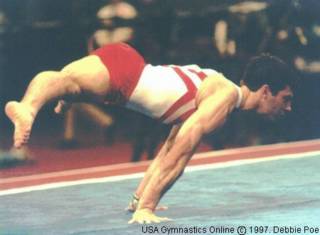
Gymnastic Bodies - This is my main resources for all my gymnastic strength training. While I was learning about their system they introduced an elaborate progression structure where they produced various courses I use: Foundation (consisting of seven foundational elements: front lever, straddle planche, side lever, manna, single leg squat, hollowback press and rope climb), Handstand (first freestanding, then press handstand followed by one-arm handstand) and Stretch (with front splits, middle splits and thoracic bridge). I spent an inordinate amount of time perusing their forum, much of which is freely accessed, and loved getting deeply into the discussions.
Gold Medal Bodies - Though I do not use their programs (which have expanded since I was looking them) this group of athletes are an energetic crew with less of an elitist attitude about themselves. Had I not already invested a substantial amount in the aforementioned Gymnastic Bodies curriculum, I would love to see what this group offers more specifically. They do have various free articles and tutorials. My first handstand tutorial was one I received for free from them and it's great!
Yuri Marmerstein - I heard about Yuri through the Gymnastic Bodies forum and knew he was a teacher of handstands. As I mentioned before, I've always loved handstands and I wanted to know what Yuri could teach. Though I already had two other handstand programs and tutorials, I purchased Yuri's ebook Balancing the Equation. Though the specific progressions are similar to other products I had, Yuri's ability to explain elements and help troubleshoot through sticking points was unparalleled and at a fraction of the cost. I felt like a few things he focused on were just what I needed to better understand balancing on my hands. He seems like a great guy and I hope to have him to Utah for a seminar if I could garner enough committed interest.
I am by no means a master of anything related to gymnastic strength. I am constantly mesmerized by the abilities of other athletes in this realm. But much of what these programs and instructors teach is within reach for any disciplined learner. Gymnastic strength is probably my highest priority in my training because of the freedom of movement it offers. As a complement to the wealth and abundance within gymnastics, I next explore the world of unfamiliar words like crimps, cruxes, gastons, jugs, lock-offs and slopers found in climbing...
Tuesday, February 2, 2016
Simple Strength Programming
Creating a program for strength training can be as complex as you like. For some people, complexity fuels their desire to complete each session. For others, complexity makes them feel lost and confused. You can find hundreds of thousands of programs that all claim to be the most excellent and brilliant training tool. I find, however, that a simple program done consistently will help many people. Here is one example that I like (I'm sure I read this somewhere else, if it's your program, let me know):
1. Squat
2. Upper Body Push
3. Deadlift
4. Upper Body Pull
I love this simple template because it hits most of the major muscle groups. It isn't as short as Pavel Tsatsouline's Power to the People program, but it's close.
(You can google all of these exercises)
Squat
Choose either a front squat or a back squat.
Upper Body Push
Choose either the bench press or the overhead press.
Deadlift
Choose either conventional or sumo deadlift.
Upper Body Pull
Choose either a barbell row or pullups
This is by no means an exhaustive list of the potential exercises in each category. With the exception of the pullup you just need a barbell, some place from which to squat and weights. That's it. If you go to a commercial gym they should have all of those items (excepting Planet Fitness, maybe. I don't get that place). For pullups there is probably a bar somewhere there. Or find a playground. If you don't, come over to my house and we can bang out a few sets.
When it comes to sets and reps, there are also many opinions about what constitutes bodybuilding vs pure strength vs endurance. I think there is benefit to mixing up the repetitions between 2 and 12. I like to divide it up easily like this:
Month 1: Sets of 10-12
Month 2: Sets of 6-8
Month 3: Sets of 4-5
Month 4: Sets of 2-3
Find a weight that challenges you on the last rep of the last set. Once you feel like you could get another rep on each set (maybe even do that rep) up the weight by 5-10 pounds. Get it a total of 15-30 reps (3 sets of 5 reps, 2 sets of 10 reps, 8 sets of 2 reps, etc.).
I believe that even a poor program done consistently will yield fantastic results. As you become consistent in your training, feel free to experiment. Look at your goals and assess your program based on your needs. Remember, this is only one type of program. If lifting weights at a commercial gym doesn't excite you in any way, do something different. Use the internet or other resources to plan. Also, feel free to ask me anything about what I think about a program or training style.
My next simple programming advice with deal with conditioning (or endurance or aerobic capacity or whatever you want to call it).
1. Squat
2. Upper Body Push
3. Deadlift
4. Upper Body Pull
I love this simple template because it hits most of the major muscle groups. It isn't as short as Pavel Tsatsouline's Power to the People program, but it's close.
(You can google all of these exercises)
Squat
Choose either a front squat or a back squat.
Upper Body Push
Choose either the bench press or the overhead press.
Deadlift
Choose either conventional or sumo deadlift.
Upper Body Pull
Choose either a barbell row or pullups
This is by no means an exhaustive list of the potential exercises in each category. With the exception of the pullup you just need a barbell, some place from which to squat and weights. That's it. If you go to a commercial gym they should have all of those items (excepting Planet Fitness, maybe. I don't get that place). For pullups there is probably a bar somewhere there. Or find a playground. If you don't, come over to my house and we can bang out a few sets.
When it comes to sets and reps, there are also many opinions about what constitutes bodybuilding vs pure strength vs endurance. I think there is benefit to mixing up the repetitions between 2 and 12. I like to divide it up easily like this:
Month 1: Sets of 10-12
Month 2: Sets of 6-8
Month 3: Sets of 4-5
Month 4: Sets of 2-3
Find a weight that challenges you on the last rep of the last set. Once you feel like you could get another rep on each set (maybe even do that rep) up the weight by 5-10 pounds. Get it a total of 15-30 reps (3 sets of 5 reps, 2 sets of 10 reps, 8 sets of 2 reps, etc.).
I believe that even a poor program done consistently will yield fantastic results. As you become consistent in your training, feel free to experiment. Look at your goals and assess your program based on your needs. Remember, this is only one type of program. If lifting weights at a commercial gym doesn't excite you in any way, do something different. Use the internet or other resources to plan. Also, feel free to ask me anything about what I think about a program or training style.
My next simple programming advice with deal with conditioning (or endurance or aerobic capacity or whatever you want to call it).
Subscribe to:
Posts (Atom)